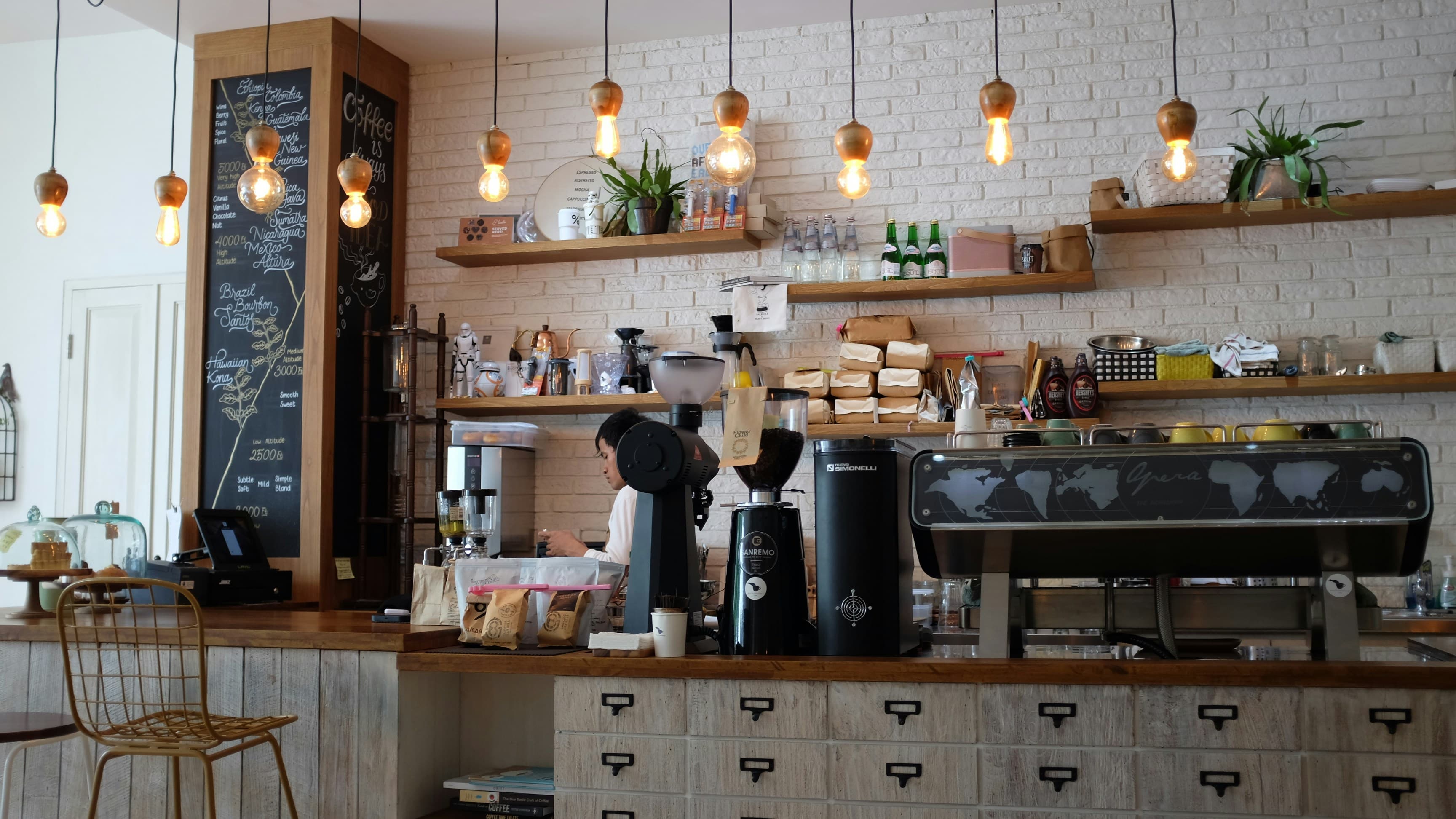
How a 60-seat Mount Pleasant coffee bar grew retail SKUs to 22% of revenue.
Most coffee bars treat retail as an afterthought. This one made it a quarter of the business. Here's the eighteen-month rebuild, the SKU mix, and the marketing playbook that drove it.
In the spring of 2024, a 60-seat coffee bar on Main Street near Mount Pleasant was doing the same thing every coffee bar on Main Street was doing. Specialty espresso, light food menu, a small retail shelf with a bag of whole bean and a couple of branded mugs. Retail was 3% of revenue and the owner had stopped tracking it.
In May 2026, retail is 22% of revenue. Same square footage. Same head count. Same retail shelf — six feet long, eye-level, behind the bar.
Here's what changed.
The starting point
The owner — call her R — had a clear point of view about coffee. She'd worked at three of the best roasters on the west coast and she had opinions. Her menu reflected it. Her staff knew it. Her retail shelf was generic.
The first thing we did was an inventory of what she had a strong opinion about. Not "what could we sell" — what would she talk about for ten minutes if a regular asked. The list came out to nineteen items: four roasters (not all her own), three brewing methods, a French ceramic dripper she imported herself, a Japanese kettle, two coffee books, a chocolate from a single-origin maker in Quebec, two oat milks (one she preferred, one she didn't), and a brand of biscotti from a bakery two blocks away.
That list became the retail strategy. Not a shelf of merchandise. A shelf of opinions.
The eighteen-month rebuild
Months 1–3: We narrowed to twelve SKUs from the nineteen. Half came from R's preferred list, half were existing best-sellers we kept for cashflow. The twelve had hand-lettered shelf cards explaining why she carried each one. Every barista learned a one-sentence story for each. Retail jumped to 7% of revenue inside eight weeks.
Months 4–9: We rotated one to two SKUs per month based on what regulars asked about. A guest asked about the Quebec chocolate; we added the maker's caramel sauce. A guest asked which oat milk we used at home; we added a third — a smaller brand R had switched to. The shelf became a conversation between R and her regulars, with every rotation telling them she was paying attention. Retail climbed to 14%.
Months 10–18: We added a private-label whole bean — R's signature blend from her preferred roaster, in her own bag. This was the inflection point. The blend was 8% of retail revenue inside three months, then 14%. Margin on a $24 bag was over $14. Retail hit 22% of revenue and held.
What didn't work
Three things we tried that didn't move the number:
A subscription program for the whole bean. We launched it at month 8. Forty-one subscribers in the first month, twenty-six by month four, twelve by month six. The acquisition cost via Meta ads was higher than the lifetime value. We killed it.
Branded apparel. We carried a t-shirt and a tote bag from month 4. They sold about one item per week, combined. Neither was a repeat-purchase item. The shelf space was worth more.
A weekend tasting class. We ran four sessions at $45/seat. Two filled, two didn't. The labor cost ate the margin. We turned the format into a free fifteen-minute Saturday-morning brew demo at the bar instead. That sold whole bean.
The marketing math
Here's the thing about a 22% retail mix in a coffee bar: the marketing for retail is the experience itself. R doesn't run ads for her retail line. She doesn't have a separate retail landing page. The marketing channel is her bar.
What that means in practice:
- Every barista has a story for every SKU. This is the marketing channel.
- Every shelf card is hand-lettered by R. This is the brand.
- Every rotation is announced on Instagram with a story, not a sale. "The Quebec chocolate is back, here's why I carry it." This is the social play.
- Every regular's purchase is acknowledged the next visit. "How was the dripper?" This is the retention loop.
The retail line works because it's not a retail line. It's the bar's point of view, stocked.
What to take from this
If you have a defined point of view and a regular customer base, you have a retail line you haven't built yet. The order of operations:
- Write down everything you have a strong opinion about. Don't filter.
- Pick the twelve to eighteen items that fit your shelf and your story.
- Hand-letter shelf cards or write the equivalent in your voice — typed cards do not work.
- Train one sentence per SKU at shift handover, every shift, for thirty days.
- Rotate one to two SKUs per month based on what regulars ask about.
That's the play. Eighteen months, 22% of revenue, zero ads.
— Damon
Frequently asked
Does this work for venues that aren't coffee bars?
The retail-attach play works for any venue with a defined point of view and a regular customer base. Pubs sell merch and limited-edition spirits. Restaurants sell sauce, spice blends, and cookbooks. Cafes sell whole bean, mugs, and books. The pattern is the same: tell a story, control the SKU count, sell with the experience.
What's the right ratio of retail SKUs to keep on shelf?
Twelve to eighteen for most independent venues. Fewer than twelve looks empty. More than eighteen feels cluttered and your staff can't tell the story for each one. This venue runs sixteen at any given time, rotating one to two per month.
How do you train baristas to actually sell retail?
Give them a story for every SKU, not a pitch. The story is one sentence: where it's from, why you carry it, what it tastes like. Train it during shift handover, not in a class. Reward the highest retail-attach rate weekly with cash. Sixty dollars makes a barista care about retail for a month.
Want to model your own retail line?
DAMON AI's brand intelligence can map your existing customer base to the SKU mix most likely to convert.
Try DAMON AI →